• Artículos
Suicide Prevention and Awareness Month: A Call for Connection and Hope
Dillon Browne on Peer Support and His Vision for the Future
For decades, people with lived experience of mental health challenges have been supporting one another in recovery. What began as a movement for dignity, rights, and self-determination has grown into an essential part of today’s mental health system. Peer support is built on a simple but powerful idea: people who have faced similar challenges can offer understanding, hope, and guidance in ways that are uniquely impactful. From early advocacy efforts to today’s certified peer specialists, peer support has helped mental healthcare step into a more person-centered, recovery-focused orientation.
Dillon Browne, Greater Mental Health’s Vice President of Rehabilitation and Recovery Services is a recognized leader in New York’s peer support movement who has built his career around creating opportunities for people with lived experience to help shape the future of mental healthcare.
Dillon’s path to this work began with his own experiences navigating the mental health system. Growing up with an autism diagnosis, he spent years engaging with mental health services but often found them disconnected from what he needed most. A particularly difficult experience during a mental health crisis in college reinforced his belief that there had to be a more compassionate way to support people.
He was introduced to the concept of peer support during an information session to become an intern at Greater Mental Health while Dillon was in the Graduate School of Social Work at Fordham University. For the first time, he encountered a setting where he learned that sharing your mental health journey was not something to conceal, but something that you could feel safe to talk about with others and gain real support from people who understand.
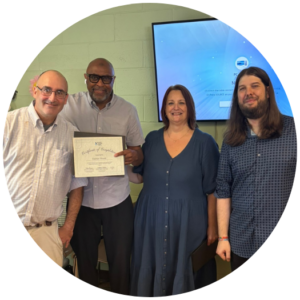
“I had always known my experiences and my diagnosis would inform my work, but I never expected to be able to openly acknowledge them,” Dillon recalled. “The staff at The Sterling Center presented this idea of peers with lived experience, and that was the first time I had heard that. I don’t think I walked in planning to, but during my interview for a fieldwork placement at Sterling, I did disclose my own diagnosis, and I saw their excitement rather than what I had come to expect at the time, a negative reaction to professionals disclosing that they were also clients. It’s well known that there are plenty of folks in the mental health field who have their own experiences with mental health conditions, but at that time, it was an unspoken rule that you didn’t talk about it.”
Over the past 11 years, Dillon has witnessed a dramatic shift in how peer support is viewed throughout the field. When he began, peer professionals were often limited to dedicated peer programs. Today, Greater Mental Health has integrated peer support across a broad range of services, including clinical settings and multidisciplinary teams.
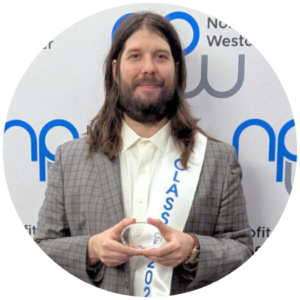
“We no longer see it as peer services over here and regular services over here,” Dillon said. “Peers are a natural part of the ecosystem of support that we provide.”
With Dillon’s guidance, Greater Mental Health has continued to utilize peers to refine programming. He established the agency’s Peer Intervision Group and the Peer Professional Integration and Steering Committee, creating opportunities for peer professionals to support one another, strengthen programming, and help guide agency-wide initiatives. He also leads the Peer and Family Advisory Council, ensuring that the voices of clients and families directly and collaboratively inform organizational decision-making.
As peer support continues to expand across New York and the nation, Dillon emphasizes the importance of preserving what has always been at its core: people drawing on their own experiences to support others and recognizing those with lived experience as experts in their own recovery.
Dillon also sees a need to build the next generation of peer specialists by introducing young people to the field and creating pathways through colleges and universities. As peer support becomes a larger part of the mental health workforce, these pathways can help more young people with lived experience see peer support as a meaningful career.
As the field continues to grow, Greater Mental Health is committed to expanding opportunities for people to pursue peer support as a profession and strengthening its role within the mental health workforce.
• Artículos
• Artículos
About Our Distinguished Leader in Mental Health Honoree
• Artículos
About Our Champion for Hope and Healing
• Artículos
Helping People Thrive: A Look Back, and Ahead
• Artículos
About Our Voice for Well-Being Honoree